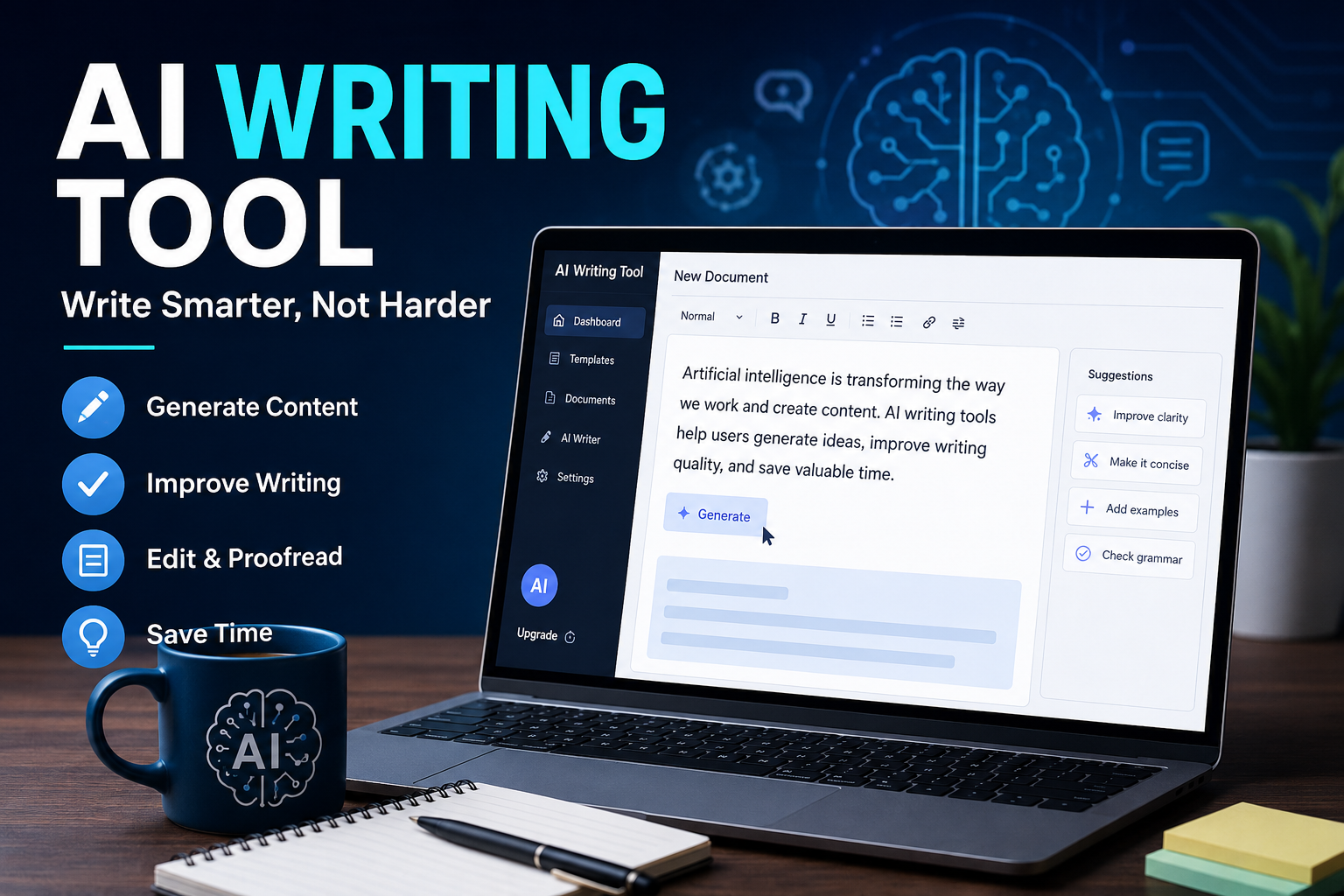
An AI writing tool is a useful solution for people who want to create high-quality content in less time. Whether you are a student, blogger, freelancer, business owner, or social media creator, artificial intelligence can help you write articles, emails, product descriptions, captions, and many other types of content. In 2026, AI writing technology is becoming more accessible, making it easier for beginners and professionals to improve their writing process.
However, choosing the right tool is important. Some platforms are better for long-form articles, while others focus on grammar, editing, or marketing content. In this guide, we will explain how AI writing tools work, explore popular options, and share practical tips for getting better results.
What Is an AI Writing Tool?
An AI writing tool is software that uses artificial intelligence to generate, edit, summarize, or improve written content. Users can enter a prompt, describe a topic, or provide existing text, and the tool produces suggestions based on the instructions.
For example, you can ask an AI writing assistant to create a blog introduction, rewrite a paragraph in simple English, suggest article titles, or correct grammar mistakes.
These tools can support different writing tasks, including:
- Blog posts and informational articles
- Social media captions and posts
- Emails and business documents
- Product descriptions and advertisements
- Academic study notes and summaries
- Website pages and SEO content
AI writing tools are designed to assist writers, but human review remains important for accuracy, originality, and natural communication.
How Does an AI Writing Tool Work?
Most AI writing tool use language models trained on large collections of text. These models learn patterns in language and use the context of a prompt to predict suitable words and sentences.
The process usually involves three simple steps.
1. Enter your instructions: Explain the topic, audience, writing style, and required length.
2. Generate the content: The AI produces a draft based on your instructions.
3. Review and improve: Check the information, adjust the tone, add examples, and correct mistakes before publishing.
The quality of the result depends partly on the clarity of your prompt. A specific request generally produces a more useful draft than a vague instruction.
7 Best AI Writing Tools to Try in 2026
Several platforms offer writing assistance, although their features, pricing, and free usage limits can change. Here are seven popular options to consider.
1. ChatGPT
ChatGPT can help users brainstorm ideas, write blog drafts, organize outlines, rewrite paragraphs, and create different versions of existing content.
It is useful for bloggers, students, freelancers, and business owners who need flexible writing support. You can also request a particular tone, reading level, or article structure.
Best for: General writing, brainstorming, outlines, and content development.
2. Grammarly
Grammarly focuses on improving written communication. It can help identify grammar, spelling, punctuation, and clarity issues. Depending on the plan and available features, it may also offer rewriting and AI-assisted drafting.
It is particularly useful when you already have a draft and want to make it clearer and more professional.
Best for: Grammar correction, proofreading, and editing.
3. QuillBot
QuillBot is known for paraphrasing, summarizing, and rewriting text. It can help users explore alternative ways to express an idea or make complicated sentences easier to understand.
Always review rewritten text to ensure that the original meaning remains accurate and that any required citations are preserved.
Best for: Paraphrasing, summarizing, and improving sentence structure.
4. Jasper
Jasper is an AI content platform designed primarily for marketing and business writing. It can support advertising copy, brand messaging, campaign content, and other commercial writing tasks.
It may be useful for teams that need consistent messaging across multiple channels.
Best for: Marketing campaigns and business content.
5. Copy.ai
Copy.ai provides AI-assisted workflows for marketing and business communication. Depending on the available plan, it can support sales messages, promotional content, and other repetitive writing tasks.
It is worth considering if your work involves creating many similar pieces of business content.
Best for: Sales copy, marketing messages, and business writing workflows.
6. Writesonic
Writesonic offers AI-assisted content creation and marketing features. Its available tools and plans may support article drafting, landing page copy, and search-focused content workflows.
Writers should still check factual claims, source quality, and search intent before publishing the final article.
Best for: Marketing content and SEO-related writing tasks.
7. Notion AI
Notion AI brings writing assistance into the Notion workspace. It can help users summarize notes, organize ideas, improve drafts, and turn rough information into more structured documents.
It may be especially convenient for people who already use Notion for planning and project management.
Best for: Notes, documentation, summaries, and organized writing projects.
Key Benefits of Using an AI Writing Tool
An AI writing tool can improve productivity when it is used thoughtfully.
Saves Time
Starting from a blank page can be difficult. AI can create an initial outline or draft, allowing writers to spend more time researching, editing, and adding valuable information.
Helps Overcome Writer’s Block
When you cannot think of a suitable introduction or headline, AI can suggest several alternatives. You can compare them and develop the strongest idea.
Improves Readability
AI writing assistants can identify long sentences, suggest simpler wording, and help make complicated information easier to understand.
Supports SEO Content Planning
AI can help organize headings, generate title ideas, create meta descriptions, and develop article outlines based on a target keyword. However, it cannot guarantee rankings or replace reliable keyword research.
Supports Different Writing Styles
You can ask an AI tool to create formal business content, friendly social media posts, beginner-friendly explanations, or concise email drafts.
Helps Small Businesses
Small businesses can use AI to draft website copy, product descriptions, customer emails, and promotional messages without starting every piece from scratch.
How to Choose the Right AI Writing Tool
The best tool depends on your specific needs. Before selecting a platform, consider these factors.
Purpose: Decide whether you need blog writing, proofreading, paraphrasing, academic support, or marketing content.
Ease of use: Choose a platform with a simple interface and instructions that are easy to understand.
Pricing: Check free usage limits, paid plans, and whether the features you need are included.
Language support: Confirm that the tool supports your preferred language and produces natural wording.
Privacy: Avoid entering passwords, confidential business information, or sensitive personal data into tools without understanding their data policies.
Editing features: Look for useful options such as grammar checking, tone adjustment, and document organization.
Testing two or three tools with the same writing task can help you compare their output before committing to a paid subscription.
How to Use an AI Writing Tool for SEO Articles
If you manage a website, an AI writing tool can support your content workflow. Follow these practical steps.
- Research the keyword: Understand what readers are searching for and identify the questions they want answered.
- Create an outline: Organize the article into logical headings and subheadings.
- Write a detailed prompt: Include the keyword, target audience, tone, structure, and approximate word count.
- Develop the draft: Use AI suggestions as a starting point rather than treating the first output as final.
- Add useful information: Include verified facts, examples, original insights, and practical advice.
- Optimize naturally: Use the main keyword where relevant without repeating it unnecessarily.
- Proofread and publish: Check accuracy, readability, links, formatting, and originality before publishing.
Search engines prioritize helpful, reliable content that serves readers. Simply generating a large amount of AI-written text does not guarantee better search rankings.
Are Free AI Writing Tools Worth Using?
Yes, free AI writing tools can be valuable for beginners, students, bloggers, and small businesses. Many platforms provide limited access to writing, editing, or summarization features without requiring an initial payment.
However, free plans may restrict the number of requests, available models, document length, or advanced features. Some tools also require an account.
If you only need occasional writing assistance, a free plan may be enough. If you create content regularly, compare paid plans based on your workload and budget before upgrading.
Common Mistakes to Avoid When Using AI Writing Tools
Although AI can make writing easier, several mistakes can reduce content quality.
- Publishing generated text without checking its accuracy.
- Repeating the target keyword too frequently.
- Using generic introductions that provide little value.
- Including statistics or quotations without reliable sources.
- Copying the same structure for every article.
- Ignoring the needs and questions of the target audience.
- Submitting AI-generated academic work when your institution prohibits it.
The best approach is to use AI for assistance while keeping human judgment, research, and editing at the center of the process.
Why AI Writing Tools Matter for Bloggers in 2026
Blogging requires more than writing paragraphs. Publishers must research topics, plan content, create headlines, edit drafts, and maintain consistency.
An AI writing tool can simplify these tasks and help bloggers build a more organized workflow. For example, a blogger can use one tool to brainstorm ideas, another to proofread a draft, and a planning workspace to manage publication dates.
For websites such as CloudMagz.com, AI writing tools can support the creation of technology guides, AI software reviews, educational articles, and digital productivity resources. The most valuable content combines AI-assisted efficiency with original research, real examples, and clear explanations for readers.
Frequently Asked Questions
1. What is the best AI writing tool in 2026?
The best option depends on your needs. ChatGPT is versatile for general writing, Grammarly is useful for proofreading, and QuillBot is known for paraphrasing and summarization.
2. Can I use an AI writing tool for free?
Yes. Several platforms offer free plans or limited free access. Features and usage limits vary, so check the current terms of each service.
3. Can AI writing tools create SEO-friendly articles?
They can help generate outlines, headings, title ideas, and drafts. However, effective SEO also requires search intent research, accurate information, original value, and careful editing.
4. Is AI-generated content always accurate?
No. AI tools can produce incorrect or outdated information. Verify important facts using trustworthy sources before relying on or publishing the content.
5. Are AI writing tools useful for beginners?
Yes. Beginners can use them to understand article structure, improve grammar, brainstorm ideas, and practice writing. Reviewing and learning from the suggestions helps build long-term writing skills.
6. Will AI writing tools replace human writers?
AI can automate some repetitive writing tasks, but human creativity, subject knowledge, judgment, experience, and original reporting remain important. Many writers use AI as an assistant rather than a complete replacement.
Conclusion
An AI writing tool can make content creation faster, easier, and more organized in 2026. From drafting blog posts to correcting grammar and creating marketing copy, different platforms offer features for different writing needs.
Start by choosing a tool that matches your goals, test its free features when available, and review every draft carefully. For bloggers and website owners, the strongest results come from combining AI assistance with accurate research, original ideas, and a clear understanding of readers.
Explore CloudMagz.com for more practical guides about AI tools, digital technology, content creation, and productivity.
[…] AI platforms offer free plans with limited messages, credits, features, or processing capacity. Paid subscriptions may provide additional tools or higher usage […]